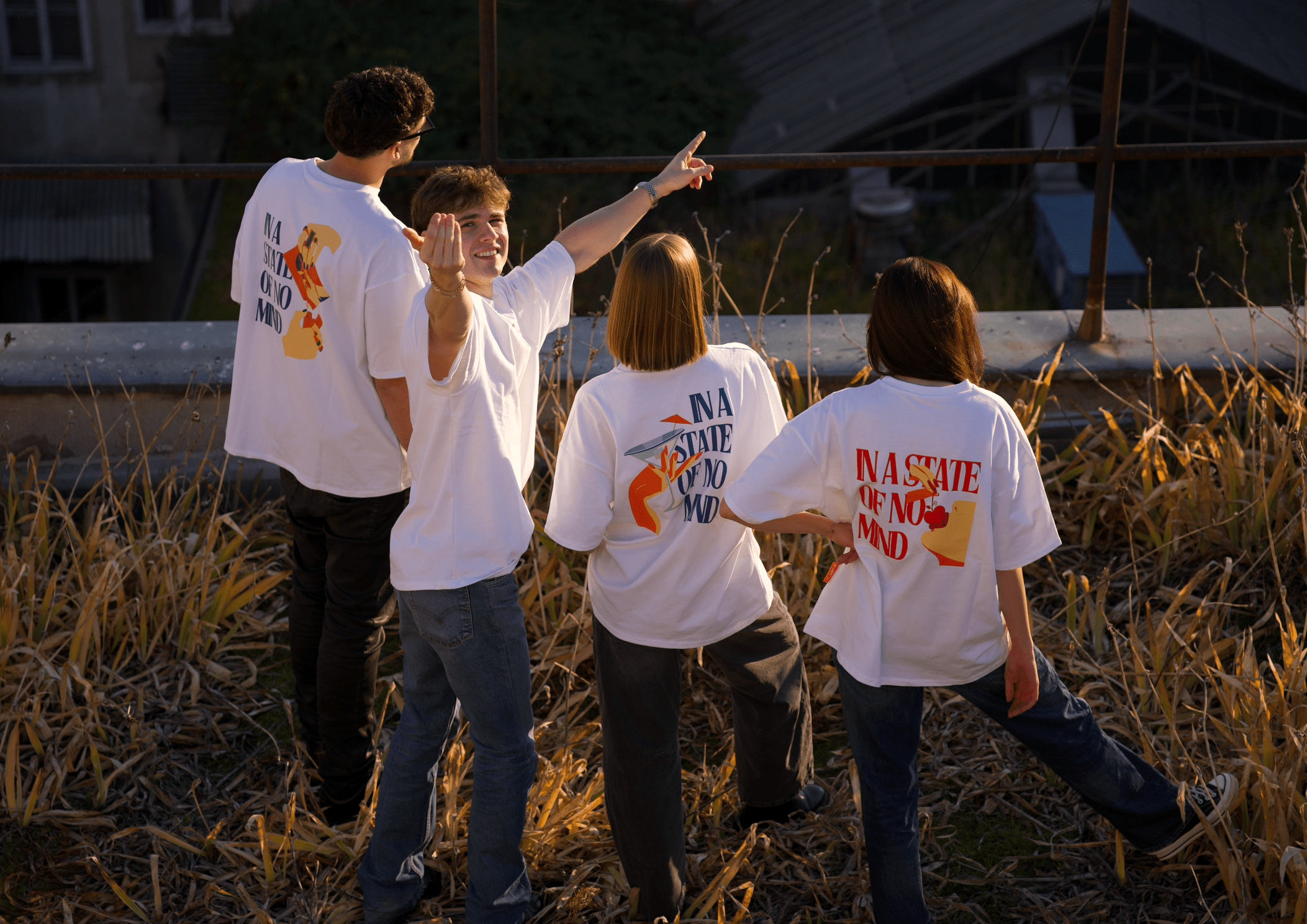
fjaka / friday feature 005

ibiza was never just about the party.

or maybe it was.
just not the kind of party we think of today.

01

When someone mentions Ibiza,

you probably know what comes to mind.
big clubs.
famous djs.
expensive tables.
thousands of people who have somehow all decided to spend their summer on the same small island.
&
fair enough.
ibiza has spent decades building that reputation.
but we started wondering how it all happened.
how did a small mediterranean island become one of the most influential places in dance music?
&
what was happening there before anyone thought to build an enormous nightclub?
turns out,
quite a lot.

02

Before anyone made plans.

long before the superclubs,
ibiza was attracting people who wanted to live a little differently.
during the 1950s, 60s and 70s, artists, writers, musicians and free spirits found their way to the island.
some came for the weather, others for the freedom, and quite a few probably didn't have much of a plan.
life moved at a different pace.
people met on beaches,
in small bars,
around dinner tables
&
in old farmhouses where someone usually had a few records worth playing.
there wasn't much of a distinction between going out and simply spending time together.
you didn't necessarily need an invitation, a reservation or an occasion.
sometimes you just went somewhere because you knew other people would be there.
it's funny how something that once felt completely normal now sounds almost like a luxury.

03

Then someone turned up the music.

pacha opened in 1973.
amnesia followed in 1976, inside an old farmhouse.
but the real shift wasn't just about opening clubs.
it was about what people started playing inside them.
by the 1980s,
an argentinian dj named alfredo fiorito had become one of the defining figures of amnesia's dancefloor.
his sets weren't particularly concerned with genres.
disco could follow rock.
pop could sit next to soul.
early house records appeared alongside songs you wouldn't necessarily expect to hear in a club.
and somehow,
it worked.
people weren't always coming to hear a particular type of music.
they came because they trusted that something interesting might happen.
that approach became central to what we now call balearic beat.
although calling it a genre almost misses the point.
it was really a willingness to play whatever felt right.
we quite like that idea.

04

& then the rest of the world caught on.

in 1987,
a group of british djs arrived in ibiza and experienced something they hadn't quite found back home.
they returned to the uk with records,
inspiration and a different understanding of what a night out could be.
the island's influence became closely connected with the rise of acid house and rave culture.
through the 1990s and 2000s,
clubs like space, pacha and amnesia helped turn ibiza into an international institution.
people travelled from everywhere.
summer residencies became traditions.
entire generations discovered new artists and sounds through nights spent on the island.
some came for a particular dj.
some for the reputation.
others probably couldn't explain exactly why they were going, but had a feeling they should.
and somewhere along the way,
this relatively small island became an enormous business.
which brings us to the ibiza most people recognise today.

05

Somewhere along the way, things got bigger.

much bigger,
actually.
clubs became superclubs.
production became a spectacle of its own.
djs became international stars.
&
there’s nothing necessarily wrong with any of that.
we love a big room when the room is right.
there's something incredible about thousands of people hearing the same record at the same moment.
but bigger also comes with its own expectations.
you book the tickets.
organise the trip.
decide which nights you're attending.
figure out who's playing where.
sometimes the entire holiday is planned before you've even arrived.
and somewhere between all those plans,
it's worth remembering that the island's nightlife grew out of people simply finding each other.
which is why we've been particularly interested in a couple of newer places.
not because they're trying to compete with the superclubs.
quite the opposite.

06

First, there's Tomodachi.

the name means friends in japanese.
which is already a pretty good place to start.
tomodachi opened in 2025 in a former churros restaurant in ibiza town.
not exactly the first place you'd expect to find one of the island's more interesting new dancefloors.
but that's part of what caught our attention.
the idea is fairly straightforward.
a smaller room.
a proper sound system.
good records.
extended sets.
&
people who have actually come to listen and dance.
phones stay away from the dancefloor.
the musical direction leans towards underground house,
minimal and deeper sounds,
with an emphasis on the music rather than enormous productions.
there's also something particularly interesting about its relationship with the island itself.
tomodachi has continued hosting nights beyond the peak summer season,
giving the year-round community another place to gather when the holiday crowds have gone home.
&
that's an important distinction.
because a club can be a destination for visitors.
but becoming somewhere people genuinely want to return to is something else entirely.
there's a familiarity to that kind of place.
you recognise a few people. someone introduces you to someone else. the dj plays something you haven't heard before.
and suddenly it's much later than you expected.
we suspect quite a few of you know the feeling.

A little further along, there's Nocturna.

nocturna arrived in summer 2026 beneath los felices hotel in cala de bou.
it has a different character from tomodachi,
but something about its approach feels related.
the concept is built around four things:
sound,
service,
design
&
community.
none of those words is particularly revolutionary on its own.
but together,
they say something interesting about how a night is put together.
because a great evening isn't always about the loudest speakers,
the biggest lineup or the most elaborate lighting.
sometimes it's the things you barely notice.
the way a space is arranged.
how people move through it.
the quality of the sound.
the atmosphere before the music really gets going.
nocturna puts considerable attention into those details.
we've always believed that the atmosphere of a place is rarely an accident.
someone has thought about it.
but when it's done well,
it shouldn't feel like someone has.


07

& then there's an old roadside bar.

we couldn't write about ibiza's music culture without mentioning at least one place that has very little to do with electronic nightlife.
can jordi blues station.
it's a family-run roadside shop and bar near sant josep,
with roots going back more than a century.
over time,
local musicians made it a place to meet and play.
informal sessions developed into regular live music,
and the terrace became a familiar gathering point.
it's not particularly glamorous.
and we mean that as a compliment.
you can buy something from the shop, sit outside, listen to a band and run into people who have probably been coming there for years.
there's something lovely about that.
because some of the most interesting cultural places weren't designed to become destinations.
they became important because people made them part of their lives.
&
that takes time.

08

So, what makes a good place?

we've been thinking about this quite a lot lately.
particularly as we've been spending more time between zagreb, madrid and barcelona,
meeting people, visiting spaces
&
seeing how differently each city approaches going out.
tomodachi and nocturna are two places we'd genuinely like to experience.
not just because of who's playing or how they look in photographs.
but because they seem to understand something we care about.
that the music is important, of course.
but so is who you're listening to it with.
and so is the feeling of wanting to come back.
it's also why we wanted to include can jordi.
because somewhere between a thoughtfully designed listening room and a family-run roadside bar, there's a common thread.
people finding somewhere they like being together.
we're always curious about places that manage to create that feeling.
especially the ones we haven't been to yet.

09

Maybe that's why Ibiza still matters.

it's easy to look at the island today and assume the entire story is about nightlife becoming bigger, louder and more expensive.
and sure,
that's part of it.
ibiza has its contradictions.
its growth has brought real challenges for residents and local culture, and not everything about the early days deserves to be romanticised either.
but more than fifty years after its first major clubs opened,
people are still finding different ways to enjoy the same island.
some prefer the enormous dancefloors.
others are happier in a room that fits a hundred people.
and some might spend the best evening of their holiday sitting outside a little bar they hadn't planned on visiting.
we don't think one version needs to replace the other.
actually, we quite like that they can all exist.
and while we were putting this story together, we kept coming back to one thought.
there are places you visit because everyone knows about them.
and there are places you hear about and immediately start imagining who you'd like to take with you.
those are usually the ones we keep thinking about.
the people were always the point.

see you around,
fjaka

01

The event was never the point.

(or maybe it was. just not in the way we thought.)
We started Fjaka with events.
That's probably the easiest way to explain it.
A room, some music, people coming in, staying longer than they said they would, someone asking what's next before the night even ended.
At the time, that felt like the whole thing.
And honestly, maybe it had to.
You need somewhere to start.
For us, it was a room full of people.
But somewhere along the way — we're not really sure when — we started paying more attention to everything happening around it.
Not just who was playing.
Not just how many people came.
Not just whether the night was “good”.
The other things.
The strange little things, actually.
A record someone played before anyone really arrived.
The person standing outside who somehow became part of the next project.
A chair we kept looking at.
A restaurant somebody mentioned at 2:17 in the morning.
A photograph.
A building.
A drink left on a table after everyone went home.
A conversation that started during the event and somehow continued for the next three days.
Hmm.
Maybe that was always the interesting part.

02

We thought we were making events.

Turns out, we were probably collecting things.
People.
Places.
Songs.
References.
Stories.
Objects.
Moments.
And, without really planning it, they slowly started forming their own little world around Fjaka.
That became much more obvious to us this year.
We would travel somewhere for an event and come back talking more about the restaurant next door.
We would book a DJ and end up discussing the chair in their studio.
We would go somewhere because of the music and remember the lighting.
Or the people.
Or the street outside.
Whatever.
That's usually how the good stuff works anyway.
You go looking for one thing and come back with five others.

03

So we started looking closer.

Not in some big strategic way.
Quite the opposite.
More like:
wait, this is good.
save this.
who made this?
what is this place?
send me that track.
we should talk to this person.
why does this room feel so good?
Those questions started happening more and more.
And eventually we thought — maybe Fjaka should have somewhere for them too.
So lately, you might have noticed a few new things appearing.

Monday Moodboard

Basically, things we're looking at.
No big explanation.
Sometimes a room.
Sometimes a typeface.
Sometimes a photograph, a car, a chair, an album cover, a colour, a strange little detail from somewhere.
No particular order.
Just good things.

04

Fjaka Finds

Things we come across and think are worth stopping for.
A place.
A person.
A sound system.
A record.
A neighbourhood.
A building.
Something somebody is making.
Basically: hey, look at this.

05

Sunday Hour

This one came from thinking about music outside of the event.
Because music doesn't always need a dance floor.
Sometimes it needs coffee.
Or a drive.
A walk.
A late breakfast.
Cleaning the apartment.
Reading.
Sun.
Nothing.
One hour.
You choose which one.

06

And now, Friday Feature.

This.
A place to stay with something for a little longer.
Sometimes that might be a person.
Sometimes a city.
A DJ.
A chef.
A photographer.
A room.
A cultural observation.
Something we can't explain in four Instagram slides without ruining it.
There won't be one format.
Actually, that's kind of the point.
There just needs to be a reason to look closer.

07

And no, we're not done with events.

Far from it.
The funny thing is that the more we started looking beyond the event, the more important the event became.
Because an event can hold all of these things at once.
Music.
People.
Space.
Light.
Design.
Clothes.
Food.
Conversation.
Timing.
A city.
That weird energy a room gets at exactly the right moment.
You can plan almost everything.
But not that.
(we've tried.)
And maybe that's why we still love doing them.
But we're beginning to think of an event less as the final product and more as one possible place where Fjaka happens.
Sometimes Fjaka can be 300 people in a room.
Sometimes it can be 15 people around a table.
Sometimes it might be a listening session.
A conversation.
A trip.
An object.
A photograph.
A record.
A piece of clothing.
Or literally just something we found and thought you might like too.
That feels much more interesting to us.

08

Zagreb, Madrid, Barcelona.

This part is new too.
Or, well, partly new.
Zagreb will always be home.
It's where Fjaka learned how to walk.
(and occasionally fall over.)
It's where most of our first ideas were tested, changed, cancelled, brought back, changed again and eventually turned into something real.
Madrid has been slowly becoming part of the story for a while now.
Different pace.
Different energy.
Different people.
And that's exactly why we like it.
Barcelona is newer.
We're still figuring it out.
Listening first.
Meeting people.
Finding places.
Trying not to arrive with a finished idea of what Fjaka there is supposed to look like.
Because, honestly, that would be boring.
The goal was never to copy Zagreb into another city.
And Madrid shouldn't look like Barcelona.
Barcelona shouldn't look like Zagreb.
The cities should change Fjaka too.
Otherwise, what's the point of going anywhere?

09

This is probably the part where we're supposed to explain what Fjaka is now.

Hmm.
We could.
We've definitely spent enough hours trying to define it.
But maybe a perfectly finished definition would ruin it a little.
Right now, Fjaka feels less like a category and more like a way of looking at things.
We're interested in sound.
People.
Places.
Design.
Objects.
Words.
Food.
Travel.
Rooms.
Rituals.
Small things that somehow end up meaning more than they should.
And, most of all, the moments where those things overlap.
A DJ in a beautiful room.
A dinner that turns into a party.
A trip built around one record store.
A conversation that becomes an event.
An event that becomes a friendship.
A piece of clothing that reminds you of a place.
You get the idea.
Or maybe you don't yet.
That's okay too.
We're still figuring some of it out ourselves.

10

What happens next?

More things.
Hopefully fewer things for no reason.
That distinction has become important to us.
We don't want to do more simply because brands are apparently supposed to be constantly doing something.
We want to make things we would genuinely want to go to, listen to, wear, read, keep or send to a friend.
Sometimes that will be an event.
Sometimes a Fjaka Talk.
Sometimes a Sunday Hour.
Sometimes an object.
Sometimes a city story.
Sometimes a person we think you should know about.
Sometimes we might disappear for a minute.
Probably healthy.
And then come back with something good.

The more we think about it, the more obvious it feels.
The event was never really the point.
It was the excuse.
An excuse to bring people together.
To hear something new.
To discover a room.
To meet somebody.
To stay a little longer.
To notice something you probably wouldn't have noticed otherwise.
And maybe that's what Fjaka has been trying to become all along.
A reason to look around.
A little slower.
A little closer.
And see what stays with you after.
Anyway.
That's where our heads are at right now.
More soon.
Probably.

· · ·
fjaka

Lula
Barbs
Paradajz
Peti Kupe
Sound Baths
Tesla
Yours Truly
Lula
Barbs
Paradajz
Peti Kupe
Sound Baths
Tesla
Yours Truly
Lula
Barbs
Paradajz
Peti Kupe
Sound Baths
Tesla
Yours Truly
001
SHOP NOW

NEXT
PARTY?

Be part of it.

Events, drops, and moments - straight to your inbox.